Projekt
Siphons (HDD) / Rotterdam
| Medium | Hot water |
| Length | approx. 30 km (supply and return) |
| Temperature | 120 °C |
| Pressure | 25 barg |
| Dimensions | Inner pipe DN 500–600–700 |
| Casing pipe | DN 700–800–900, Casing pipe extensions to DN 800–900–1000 (e.g. SIS 700/70/900) |
| Special feature | Installation using the HDD method |
| Country | The Netherlands |
| Year of construction | 2022–2027 |
zum Produkt
WarmtelinQ is currently one of the largest district heating projects in Europe and also the largest project in the company’s history. The aim of the project is to utilise industrial waste heat from the Port of Rotterdam to supply residential buildings and businesses in the Hague and Leiden region. The construction of this district heating connection will reduce the use of fossil energy sources and make a significant contribution to reducing CO₂ emissions.
The overall project is divided into three construction phases: Vlaardingen–The Hague, Vondelingenplaat–Vlaardingen and Rijswijk–Leiden. The main pipeline between Vondelingenplaat and The Hague was constructed during the first two project phases. In the third phase, a branch pipeline is being built which connects to the main route in Rijswijk and runs on to Leiden.
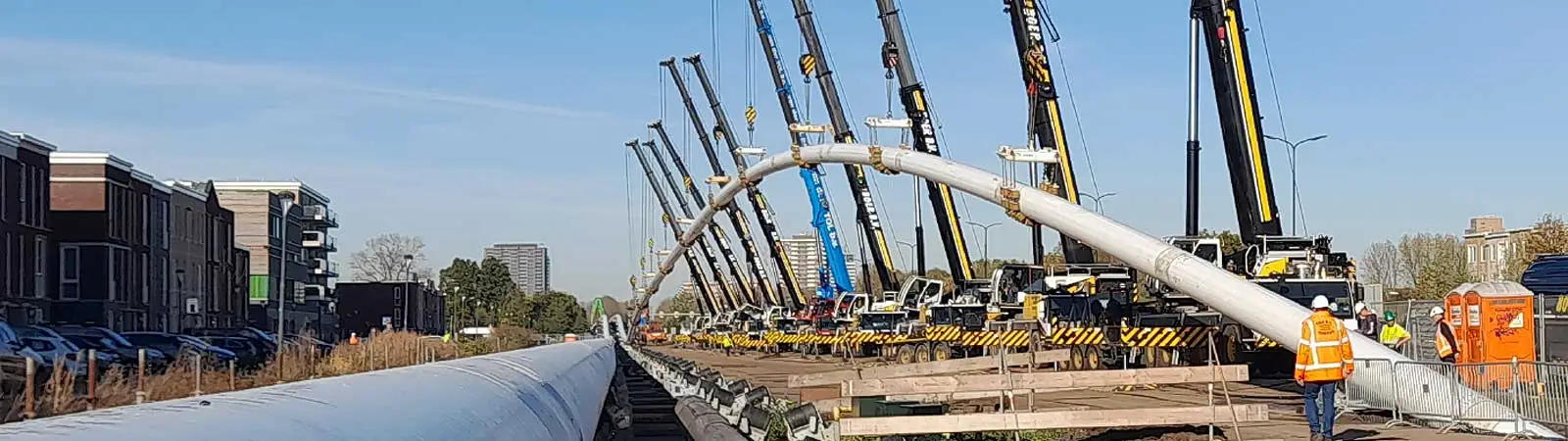
Steel-cased pipe-in-pipe systems were specifically used in this project for longer crossings using the HDD (Horizontal Directional Drilling) method. A total of 14 siphons, each with a supply and return line, were constructed, corresponding to 28 HDD strings of varying lengths and dimensions.
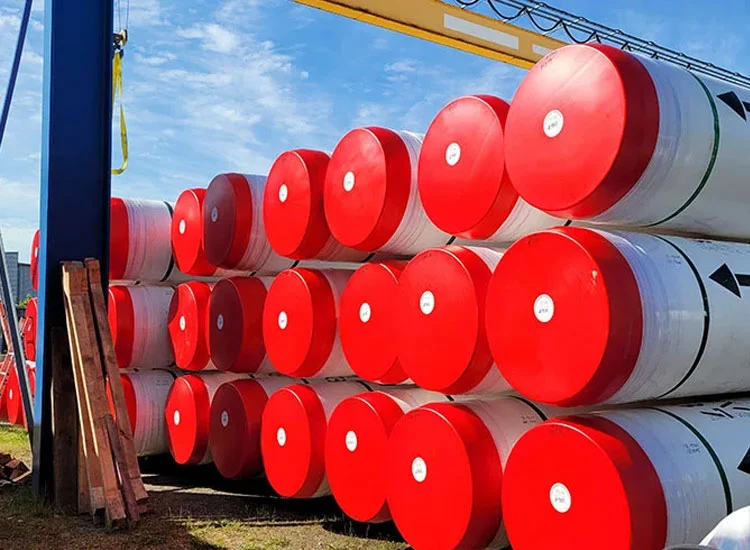
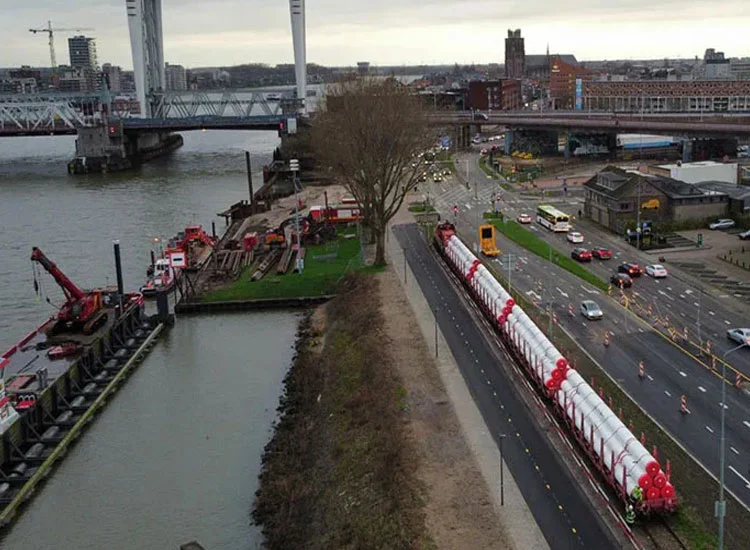
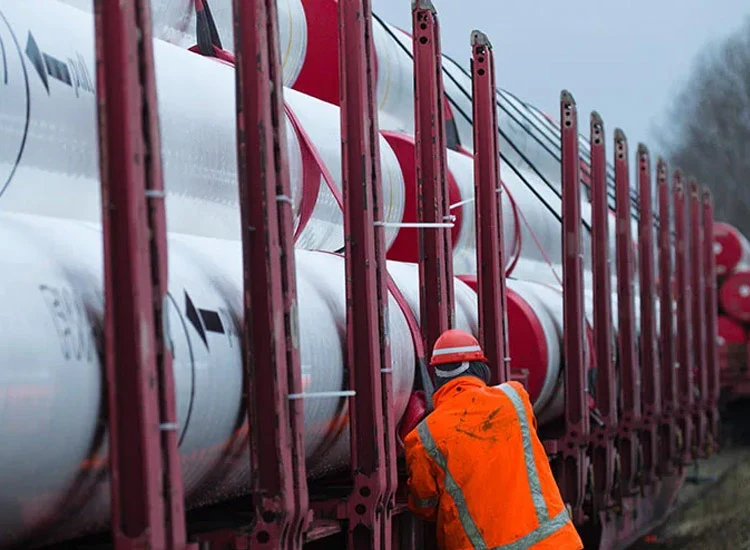
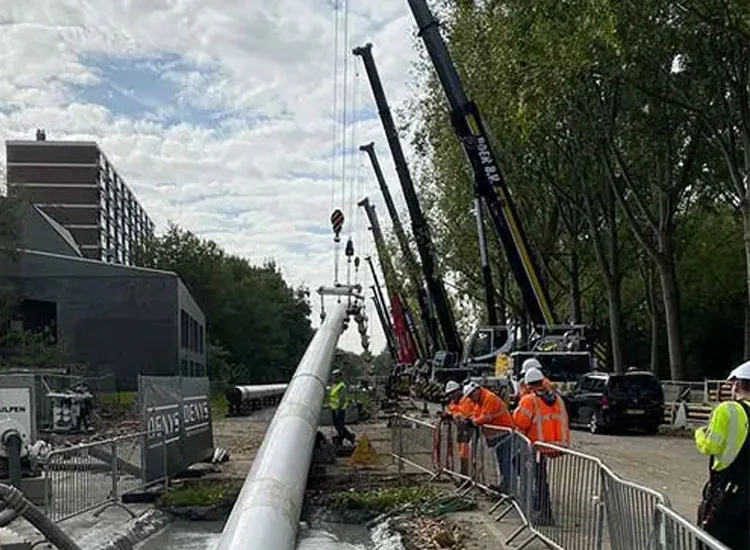
For these crossings, the pipelines were prefabricated into 18-metre-long construction units and transported by rail to the Netherlands. The units were welded together on site to form complete HDD strings, which were then pulled into the prepared flush boreholes. Following installation, each string was subjected to thermal pre-stressing using a mobile steam generator.
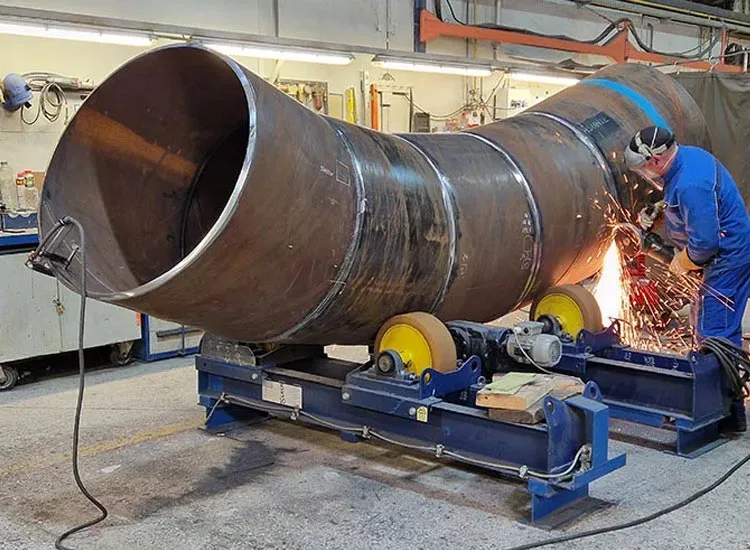
During manufacturing of the fittings, a total of 168 hot-bent bends with large radii were fabricated into mitre bends. In addition, 56 fixed points and transition pieces from SIS pipe to preinsulated pipe systems were manufactured. The majority of these components were given an external subsequent coating to ensure long-term corrosion protection.
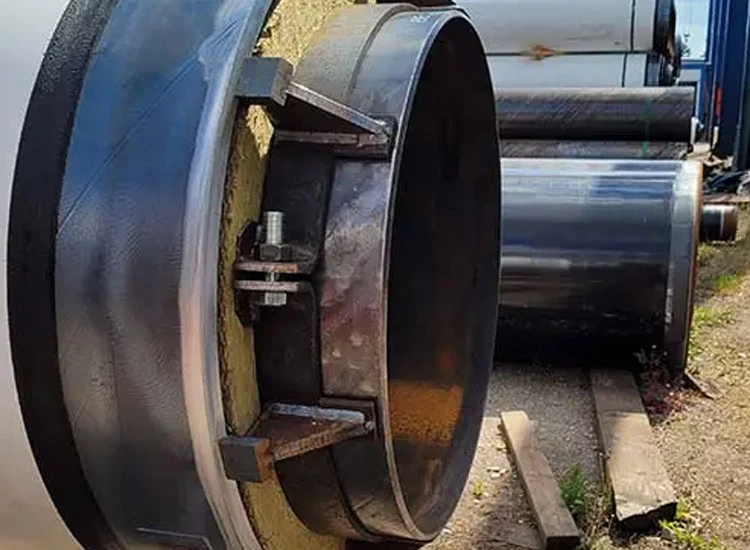
Each of the 28 HDD strings form a separate vacuum section within the SIS pipe system. The necessary connections were already integrated into the construction units at the factory, thereby reducing installation effort and welding work on site.
In addition, around 1.600 m of DN 1200 longitudinally welded pipes were supplied during the first phase of the project, which were installed in five sections using the microtunnelling method.