
LNG-Pipe
Liquefied Natural Gas in cryogenic applications
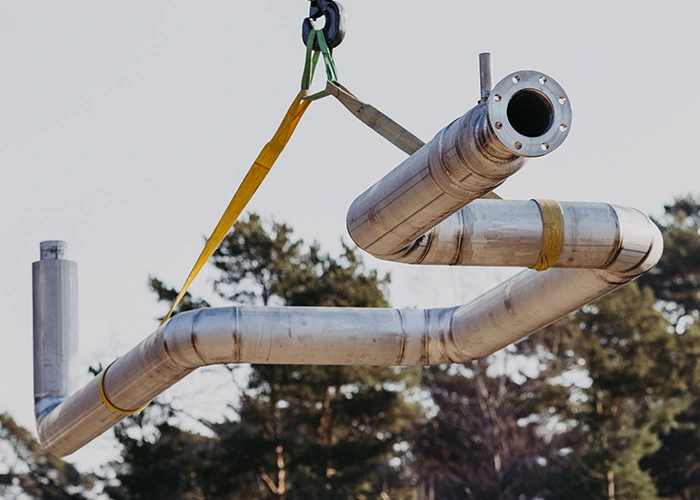
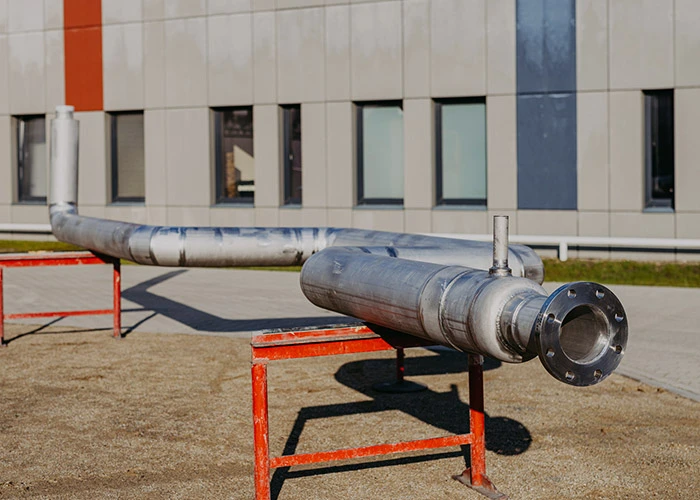
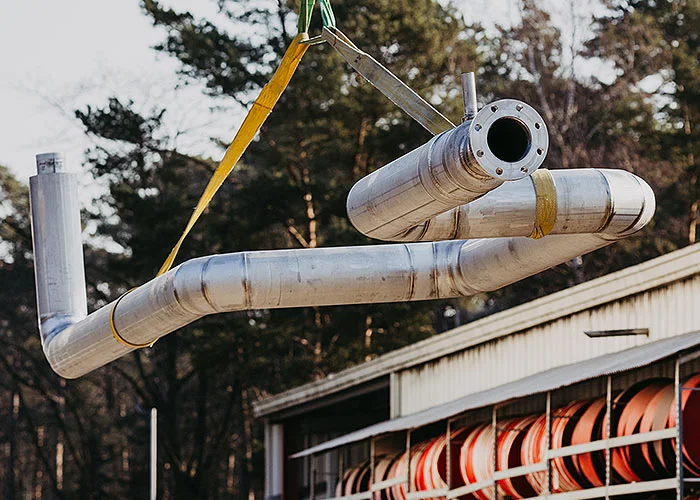
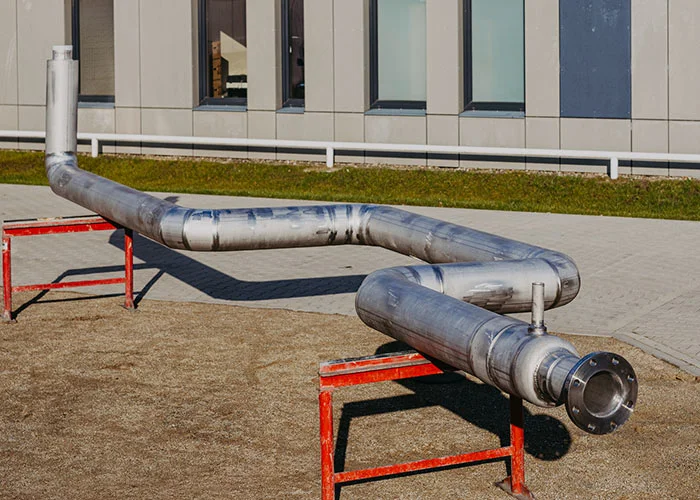
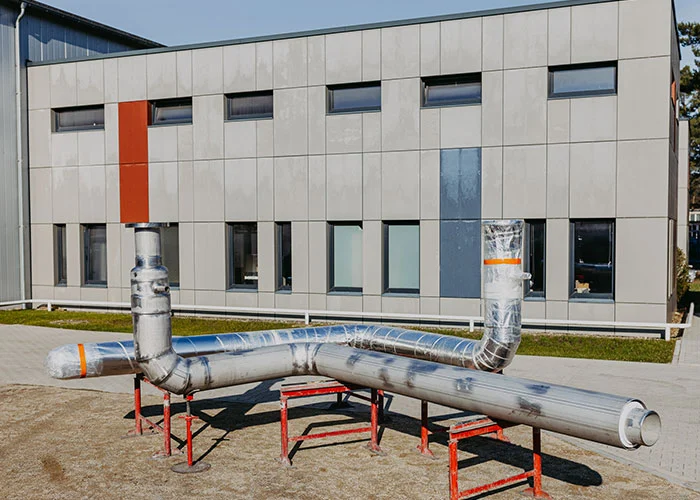
FW LNG pipes ensure the safe transport of cooled and liquefied natural gas in cryogenic applications. They are designed for use on ships and connect the bunker station to the engine. Furthermore, they are also suitable for use as underground or above-ground transfer lines in onshore facilities.
The system is designed for very low temperatures down to the cryogenic range and ensures the long-term thermal stability and leak-tightness of the pipeline. It is generally executed as a double-walled pipe system to minimise thermal losses and ensure a high level of operational safety.
In maritime applications, LNG pipes meet the specific requirements for mechanical strength, corrosion resistance and operational safety. At the same time, they enable controlled and low-loss conveyance of the medium between the storage facility and the consumer unit.
Typical applications:
-
LNG bunker systems on ships
-
Supply lines between tank and engine
-
Cryogenic transfer lines in port and terminal facilities
-
Underground and above-ground LNG infrastructure
All materials, dimensions and insulation concepts are designed specifically for each project. FW-LNG pipes enable safe and reliable operation under cryogenic conditions.
FW-LNG pipes are designed as double-walled stainless steel pipes and cover all applications:
-
As vacuum-monitored, insulated pipelines for the transport of LNG (-163°C) without ice formation on the casing pipe.
-
As non-insulated pipelines for the transport of regasified LNG. The ring space is either vacuum-monitored, ventilated or operated with nitrogen overpressure.
-
Approved by DNV, BV, LR and other marine classification societies
-
Pipe material: TP316/TP316L
-
Insulation: Aerogel
-
Max. design temperature: -196°C
-
Pressure: 10 – 20 barg (higher pressures possible)
-
Pre-fabricated pipe assembly accurate to the millimetre, with up to 6 bends
-
Available with PE or colour coating on request
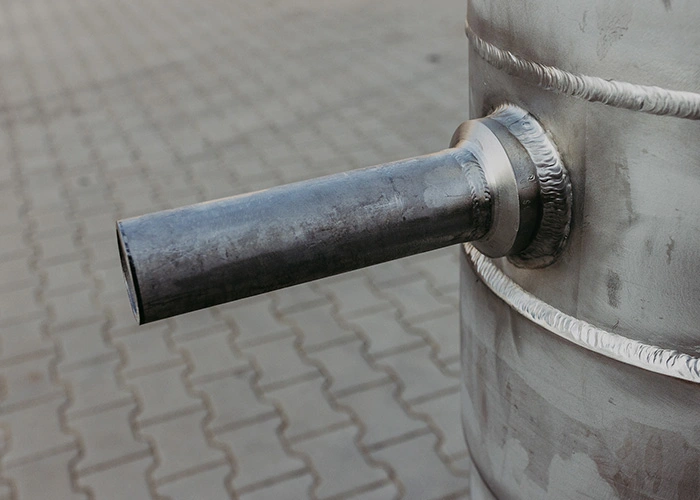
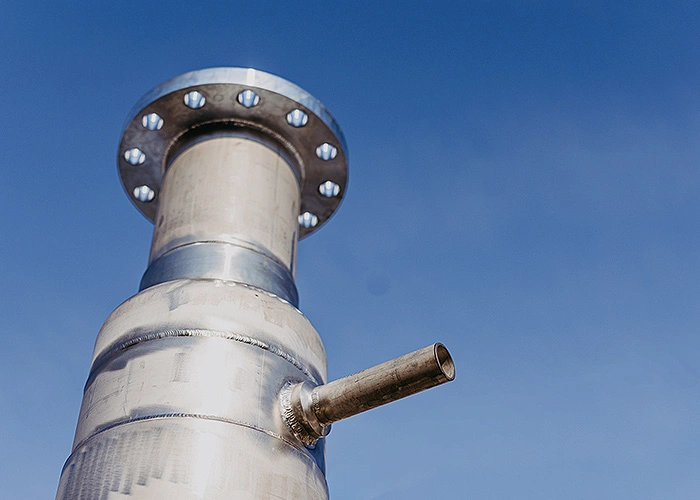
The FW-LNG-pipe consists of a service pipe made of special cryogenic-grade stainless steel, held concentrically inside a casing pipe of the same material.
Special supports with low thermal conductivity ensure the concentric position and allow axial movement while preventing lateral movement and thus potential noise generation in heavy seas.
The cold insulation is provided by a special aerogel insulation. The vacuum in the annular space further reduces thermal conductivity and ensures continuous leak monitorin