
FW-FERNWÄRME-TECHNIK
History
Founded in 1978 as an engineering consultancy, today a medium-sized partner for sophisticated pipework systems.
FW-FERNWÄRME-TECHNIK emerged from practical experience: from the planning and renovation of existing networks to the development and manufacture of our own steel-cased pipe-in-pipe systems. Through the implementation of national and international projects, our experience, in-house manufacturing capabilities and technical expertise have grown continuously. Today, FW operates where technical requirements, project-specific solutions and precise system coordination go beyond standard solutions — in district heating, industrial and energy sectors
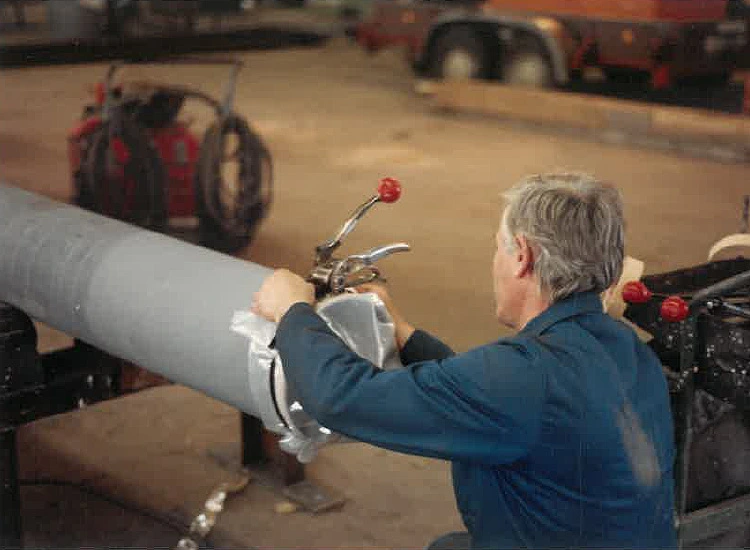
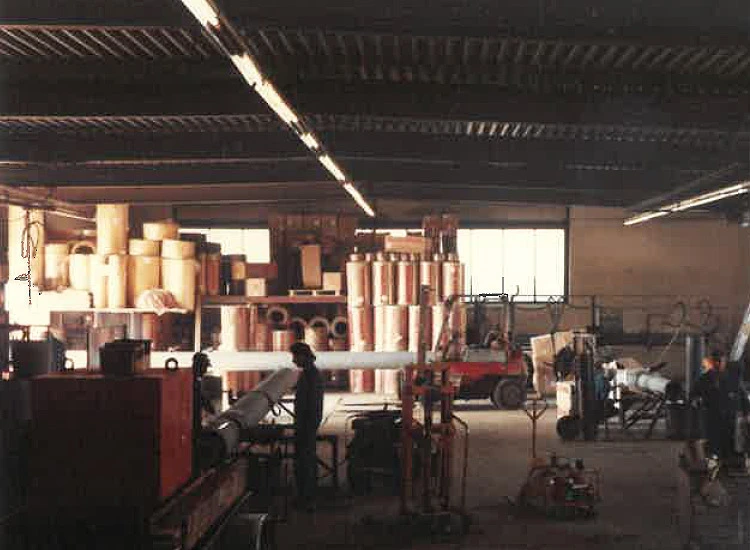
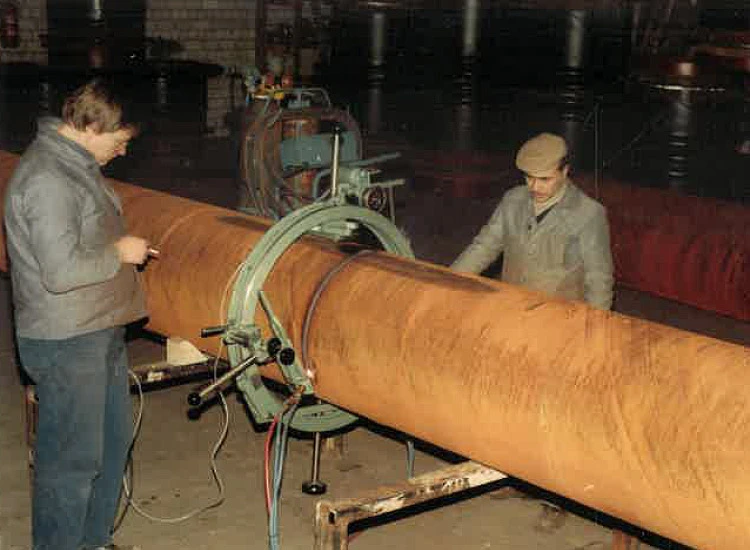
1968
Getting to know the product
• As an employee of Perma Pipe and subsequently Kabelmetall, company founder Volkwart Harders first came into contact with the steel-cased pipe-in-pipe system
• He studied the product in great depth and recognised the potential of steel-cased pipe-in-pipes for the European market
1978
Founding of IBF
- Ten years later, Harders set up his own business, the Engineering Consultancy for District Heating Technology (IBF, from the German ‘Ingenieurbüro für Fernwärmetechnik’), in Isernhagen-Kirchhorst near Hanover
- The small engineering firm initially focused exclusively on design contracts
- The ambition to improve the pipe systems of that time and to achieve entrepreneurial independence formed the basis for the company's foundation
1980
The Foundation of FW-FERNWÄRME-TECHNIK GmbH
- Following the successful planning of a major project (72 km of district heating pipeline in Saudi Arabia), the small engineering firm had sufficient financial resources to continue to grow
- In response to increased market demand, a hall was rented at the company’s headquarters, where steel-cased pipe-in-pipes could be manufactured in-house for the first time
- Furthermore, two years after its foundation, the engineering consultancy was renamed FW-FERNWÄRME-TECHNIK GmbH
1985
On a growth Course
- Thanks to its expertise in the many different pipework systems and insulation types, the renovation of district heating pipelines became a further pillar of the company’s growth in the years that followed
- The completion of an additional major contract – 56,000 weld seams had to pass radiographic (X-ray) inspection – necessitated a further expansion of the office and production space in Isernhagen
1989
German Reunification
-
The renovation of dilapidated district heating pipelines in the former GDR brought FW several contracts and accelerated the company’s growth
-
Shortly after reunification, two production halls in Tschernitz near Cottbus were acquired from the Treuhand Berlin to open up the Eastern European market (Czech Republic, Poland)
1990
Expansion of manufacturing capacity and the Eurotunnel Project
- With the relocation of key production areas to Celle, production capacities were systematically expanded from 1990 onwards. This development was a prerequisite for the implementation of the Eurotunnel project between Calais and Dover, for which fittings and components for fire-fighting water lines were manufactured.
- At that time, the company executed production at several sites in Celle, Kirchhorst and Tschernitz. In 2000, the company relocated its headquarters entirely to Celle.
2008 – 2009
Construction of the new administration Building
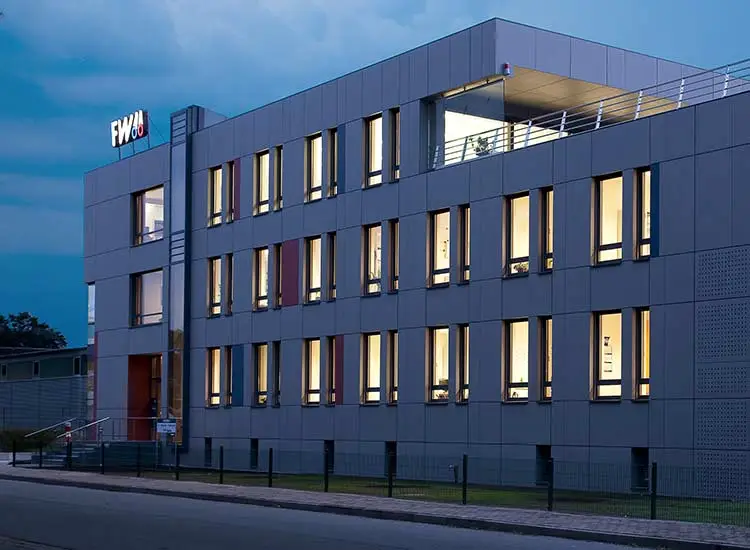
- With the construction of the new administration building between August 2008 and February 2009, the move from Wilhelm-Heinichen-Ring to Westercelle was completed. Through the acquisition of additional land, the company's current site was established there, covering an area of approximately 18,000 square metres.
- Since the move, administration, engineering and production have been consolidated at a single location. This has streamlined processes, simplified technical coordination and further improved cooperation between departments.
2010
Expansion of production Areas
-
By expanding the production areas, the manufacturing space was doubled to around 3,500 square metres. At the same time, a training workshop was set up to qualify industrial and plant mechanics.
2014 – 2015
Beinheim Project
-
A heat supply pipeline using geothermal water was designed and manufactured for a biorefinery. With a route length of approximately 16 km, this was the longest pipeline project in the company’s history to date.
2015
Entry into the LNG market
- In 2013, the development of LNG applications and the construction of a test line began with a research and funding request. Shortly afterwards, the first projects for LNG ship pipelines were realised.
- These included piping systems for dual-fuel car carriers, crane ships, and LNG and container ships with piping systems ranging from 1" to 12". From 2015 onwards, the company started manufacturing its first series orders for the LNG market.
2020
Change of generation in company Management
- Following the passing of the company’s founder, Volkwart Harders, the company has been managed since 2020 by its two directors: Stefan Pape, who is responsible for technical matters, and Andreas Fahl, who is responsible for commercial matters.
- Malte Harders, son of the company’s founder and member of the advisory board, continues to support the company in an advisory capacity. Together, they are leading the family business into the future, drawing on their technical expertise and many years of experience in the district heating market.
2022
Focus on sustainability
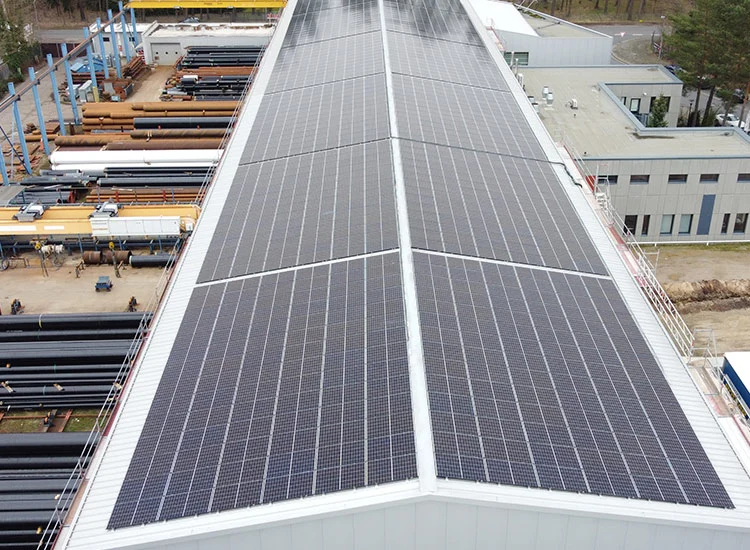
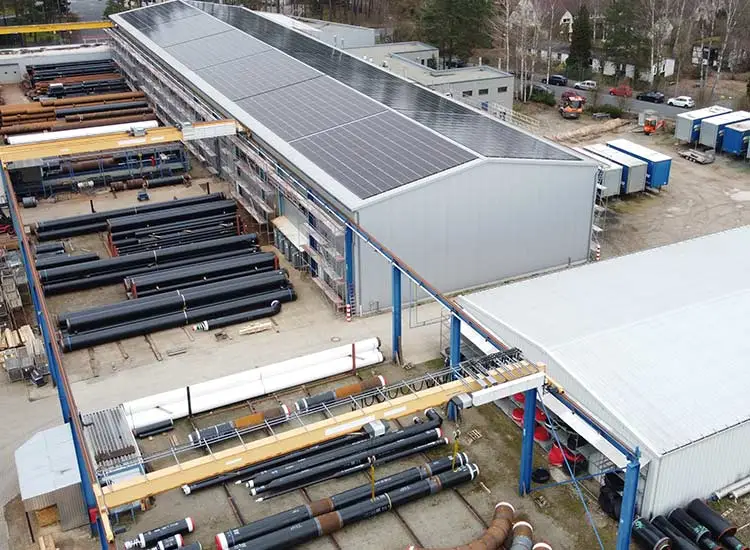
- Further measures to promote sustainable corporate development were implemented by installing a photovoltaic system, electrifying the vehicle fleet and introducing electric forklift trucks.
- In addition, the company achieved EcoVadis Gold certification.
2022–2026
WarmtelinQ Project
- With WarmtelinQ, the largest project in the company’s history to date was implemented. The district heating project utilises industrial waste heat from the Port of Rotterdam to supply The Hague and Leiden region and contributes to reducing CO₂ emissions.
- As part of the project, steel-cased pipe-in-pipe systems were manufactured and installed for numerous HDD crossings.
- These included 28 HDD strings, hot-bent pipe fittings, fixed points and transitions between steel-cased pipe-in-pipe (SIS) and pre-insulated bonded pipe systems.